The retirement gap no one is prepared for

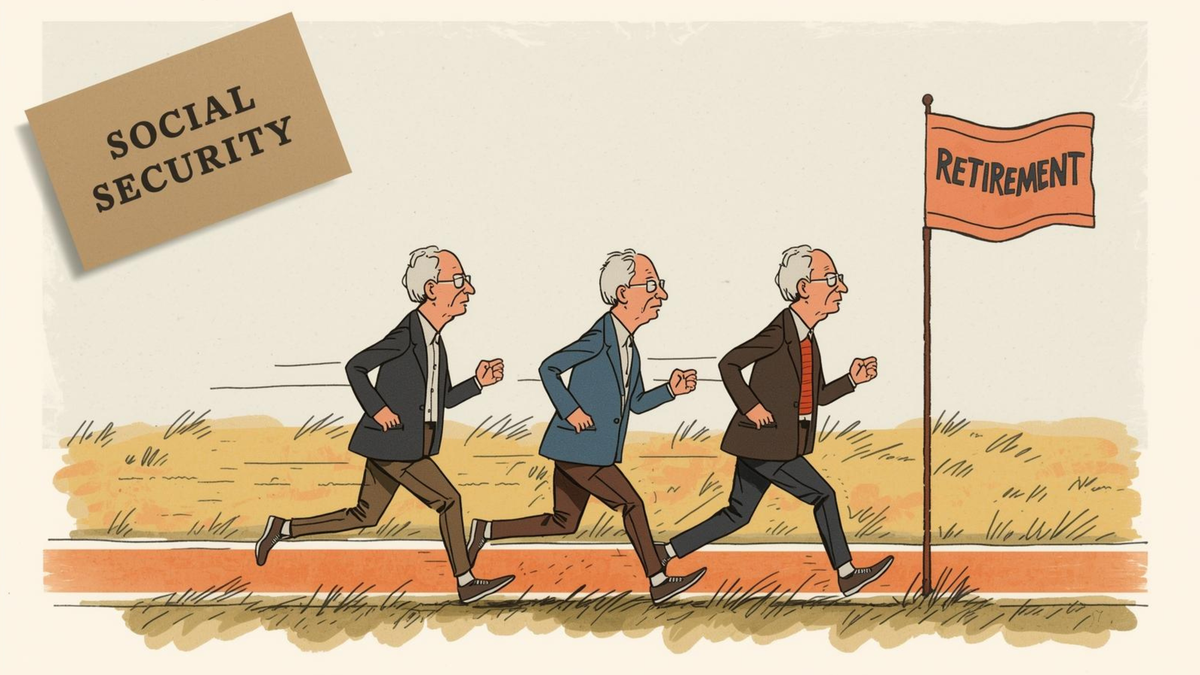
Most people assume retirement is a solved problem.
Work for decades. Contribute consistently. Rely on the system.
But the reality is starting to look very different.
Because beneath the surface, a gap is forming—one that traditional models aren’t designed to fill.
And the market is only beginning to recognize it.
You’re reading The Growth Thesis — a space built for people who think beyond headlines.
No hype. Just clarity, strategy, and execution.
If you want sharper thinking, stronger frameworks, and long-term perspective — welcome.
The Pressure Building Inside the System
Recent data continues to highlight a growing imbalance.
Organizations like the National Council on Aging have pointed out that millions of retirees still struggle financially—even with access to government support systems.
At the same time, demographic pressure is increasing. Aging populations across developed economies are placing more strain on public retirement frameworks.
Institutions such as the International Monetary Fund and the OECD have repeatedly warned that many pension systems face long-term sustainability challenges without structural adjustments.
This creates a simple but uncomfortable reality:
The baseline retirement model is becoming less reliable over time.
Why This Matters More in Today’s Macro Environment
This issue doesn’t exist in isolation.
It’s colliding with a broader macro shift.
Higher interest rates have changed capital flows. Inflation—while moderating in some areas—has already eroded purchasing power significantly over the past few years.
And longevity is increasing, extending the time horizon that retirement income needs to cover.
Even central banks like the Federal Reserve have acknowledged that financial conditions are tightening in ways that affect both savings and income strategies.
In other words:
The system is being pressured from both sides—
income is uncertain, while costs remain elevated.
Where the Market Is Quietly Adapting
When systems become less reliable, behavior changes.
Investors begin looking beyond traditional structures—not out of preference, but necessity.
And that’s where a new category of opportunity is emerging.
Not necessarily in replacing retirement systems entirely—
But in supplementing them with alternative income streams that operate outside the conventional framework.
These opportunities often sit in less visible parts of the market:
- Private deal flow
- Niche financial structures
- Income mechanisms tied to capital movement rather than asset ownership
They don’t always show up in public markets.
But they’re becoming increasingly relevant.
If you’re exploring how these alternative income models actually work, I came across a breakdown that looks specifically at one approach gaining attention right now.
It focuses on how individuals can access income streams that aren’t tied to traditional retirement timelines—and how certain legal and structural nuances may allow for earlier participation than most people expect.
What makes it interesting is not just the income angle, but how it reframes the timing of when income can begin.
→ You can review the full details here
Social Security Alternative (start collecting now)
According to the National Council on
Aging nearly 6 million seniors are
living below the poverty line.
(while collecting social security)
That’s not ok.
Who wants to work hard their entire
life only to starve through their
Golden years?
Not me. Not you. Not anybody.
That's why I'm so excited to share
this new way to collect retirement
income for up to 25 years...
All thanks to a hidden loophole in
Section 5101 of the U.S. code.
The cool thing is.
You don't need to wait to retire.
You can start collecting now.
The Bigger Shift Investors Should Watch
This isn’t just about retirement.
It’s about how income itself is evolving.
For decades, income followed a linear path:
Work → Save → Retire → Withdraw
That model is being challenged.
What’s replacing it is more dynamic:
- Multiple income streams
- Earlier access to capital flows
- Less dependence on a single system
This doesn’t eliminate risk.
But it does change where opportunity exists.
Final Thought
Most investors focus on growing capital.
Fewer focus on how and when that capital turns into income.
But in the years ahead, that distinction will matter more.
Because the biggest risk may not be market volatility—
It may be relying on a system that no longer works the way it used to.