Research without the noise

Why Free Stock Data Fails Serious Investors
I once built a model using free API data for a defense-tech portfolio.
At the time, Kratos Defense & Security Solutions had surged on a major contract announcement. But the data feed I relied on reflected that information with a delay of nearly two days—enough to materially affect positioning.
That experience highlighted a broader issue.
Free data is accessible.
But accessibility doesn’t guarantee accuracy.
You’re reading The Growth Thesis — a space built for people who think beyond headlines.
This isn’t about chasing trends.
It’s about building conviction. It’s about compounding with clarity.
If you want sharper thinking, stronger frameworks, and long-term perspective — welcome.
Conventional Wisdom: Free Data Democratizes Investing
There’s a widely accepted belief that free financial data has leveled the playing field.
Platforms like Yahoo Finance reach tens of millions of users, while services such as Alpha Vantage power thousands of applications through free tiers.
In practice, however, accessibility often comes at the cost of precision.
Industry research—including reports from firms like Bain Capital—has pointed to persistent data quality gaps in retail-level workflows. Free tools typically lack the audit layers and revision tracking that professional investors rely on.
High usage does not imply high accuracy.
Free tools are fine — until you need consistency.
Cleaner data.
Better history.
Less noise.
That’s why I use StockAnalysis.
It’s a paid research platform built for people who actually want to understand businesses, not just watch tickers.
For $6.58/month, you get a clear, consistent research process — and a 60-day money-back guarantee if it doesn’t earn a permanent spot in your workflow.
Try it. Use it. Decide later.
Markus Drop
P.S. I use this before nearly every trade or long-term investment. At this price — with a guarantee — it’s hard to justify not trying it.
Why Free Data Breaks Down: Hidden Errors That Distort Decisions
The most common issue is latency.
Free data sources can lag behind official releases, particularly during earnings events. In fast-moving sectors, even short delays can affect decision-making.
There are also structural limitations.
Survivorship bias—where delisted companies are excluded from historical datasets—can distort backtests. Over time, this can lead to overly optimistic return assumptions.
Query limits are another constraint. Many free APIs restrict the number of daily requests, making it difficult to monitor portfolios dynamically or run complex models.
Even small inconsistencies compound. A single incorrect input—whether in revenue, margins, or valuation—can materially alter the output of a model.
The Evidence: Where Data Gaps Become Investment Errors
In practice, these issues show up in subtle but meaningful ways.
Different platforms can report slightly different figures for the same company, depending on how data is sourced, adjusted, or updated. Over time, these discrepancies create noise that can obscure real trends.
For example, inconsistencies in reported revenue, margins, or growth rates across free platforms can lead to misinterpretation of a company’s trajectory—particularly in fast-evolving sectors.
Institutional platforms address this by tracking revisions, standardizing inputs, and maintaining historical consistency.
That difference is often invisible at first—but significant over time.
What to Do Instead: Prioritize Data Integrity
Professional investors don’t rely on free data for a reason.
Platforms such as Bloomberg and FactSet provide audited datasets, revision tracking, and standardized metrics across companies and time periods.
That level of consistency matters.
It allows investors to compare businesses accurately, track trends over time, and build models that reflect reality—not approximations.
Even in simpler cases—such as tracking revenue growth or margins—precision improves decision quality.
Why This Matters More Than It Seems
The impact of data quality is rarely immediate.
It compounds.
Small inaccuracies in assumptions can lead to slightly flawed decisions. Over time, those decisions accumulate—affecting allocation, timing, and ultimately returns.
This is especially relevant for long-term portfolios, where consistency and compounding matter most.
A Simple Shift That Improves Decision-Making
You don’t need the most expensive tools.
But you do need reliable ones.
For many investors, upgrading from free, fragmented data sources to a more structured platform is one of the simplest ways to improve process quality.
It doesn’t guarantee better returns.
But it reduces avoidable errors—and that alone can make a meaningful difference over time.
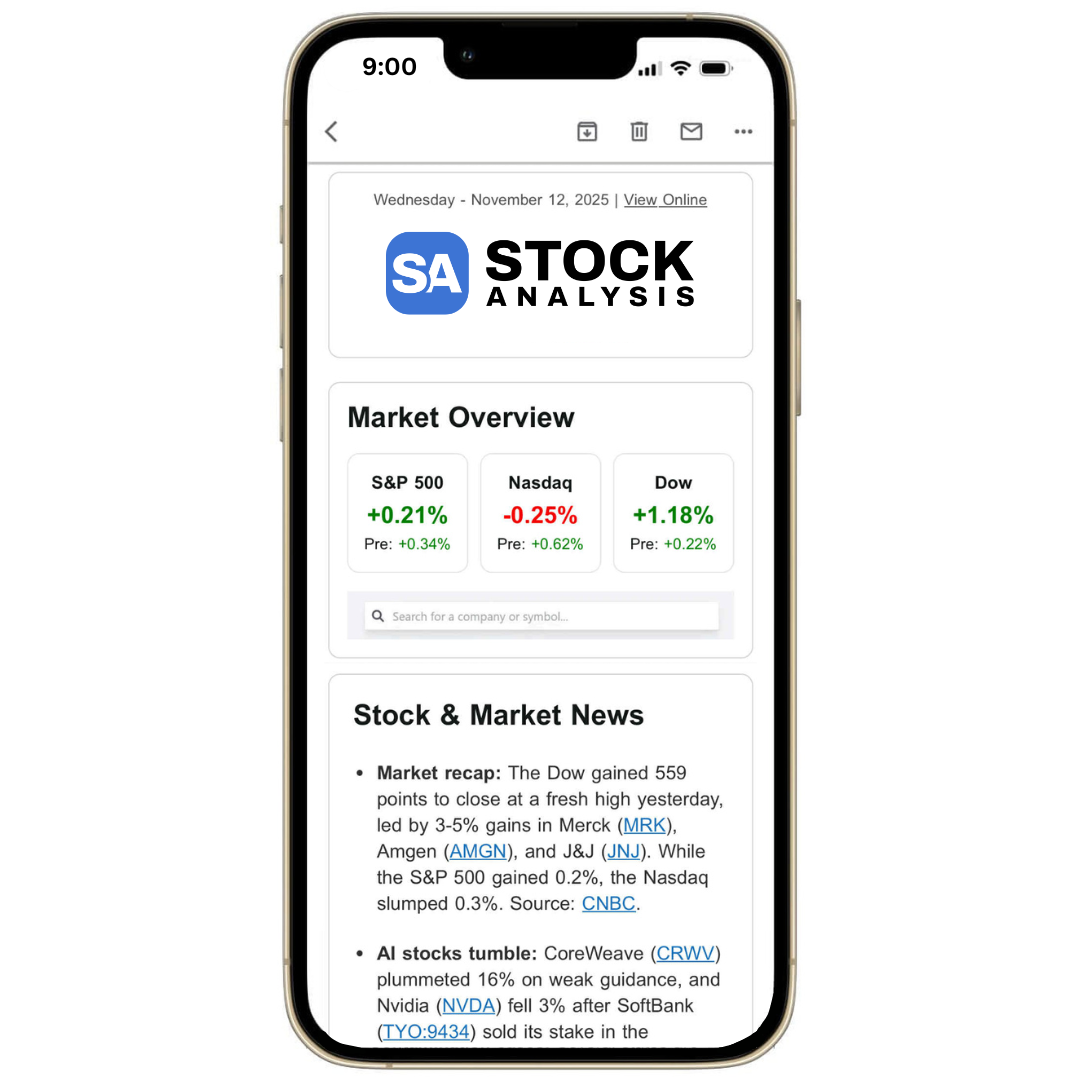
The 2-Minute Morning Brief We Never Miss
Market Bullets delivers everything you need to know before markets open:
- Quick market overview in scannable bullet points
- Top market-moving news filtered from high-quality sources only
- Major earnings and IPOs without the clickbait noise
We read this every morning before the bell. It's the fastest way to stay current without drowning in financial news.