
🔎 What I check before investing

A Practical Framework and the Research Tools Behind Smart Stock Analysis
Investing is often portrayed as a game of predictions — trying to guess which stock will explode next.
In reality, most good investing decisions come from something much less exciting: structured research.
Before I invest in any company, I run through a checklist. It’s not perfect and it evolves over time, but it helps me avoid emotional decisions and focus on fundamentals.
Below is a practical framework that can help guide the research process.
Understanding the Business Model
Before opening a spreadsheet, ask one simple question:
Do I actually understand how this company makes money?
If the answer is no, it may be worth stopping right there.
The majority of people skip this step and immediately jump into financial ratios or stock charts. But if the business itself is unclear, the numbers alone rarely tell the full story.
A few things you should look for:
- Primary sources of revenue
- Customer segments and demand drivers
- Competitive advantages
- Industry growth potential
For example, many investors are currently evaluating companies benefiting from the artificial intelligence boom. Recently, strong demand for AI-driven products has helped lift technology companies across the sector as firms race to integrate AI into software platforms and enterprise services.
Understanding why demand exists is crucial. Sometimes growth reflects a long-term shift in technology, but other times it is simply a short-term market trend.
Evaluating Financial Strength
Once the business model is clear, attention shifts to the company's financial performance.
Several key metrics provide insight into the health and sustainability of a business.
Revenue Growth
Is the company growing consistently over time?
Profitability
Profit margins often indicate whether the business model is efficient and scalable.
Debt Levels
Companies with high debt may struggle during economic downturns or rising interest rates.
Return on Equity (ROE)
ROE measures how effectively management uses shareholder capital to generate profit.
Earnings Growth
Long-term investors often focus on companies with steady earnings expansion rather than short-term revenue spikes.
Another useful metric is the PEG ratio, which compares a stock’s price-to-earnings ratio with its expected growth rate. A PEG ratio around 1 is often considered a rough indicator that valuation is aligned with growth expectations.
No single metric provides the full answer. Instead, the goal is to evaluate the overall financial picture.
Valuation: Is the Price Reasonable?
Even a great company can become a poor investment if purchased at an unreasonable price.
Valuation analysis helps determine whether a stock’s price already reflects optimistic expectations.
Several common metrics include:
- Price-to-Earnings (P/E) ratio
- PEG ratio
- Price-to-Sales (P/S) ratio
- Historical valuation levels
- Comparisons with similar companies
Recently, analysts noted that some AI and software stocks have strong demand but high valuations, meaning investors must weigh growth potential against price risk.
This is a constant balancing act in modern markets.
Monitoring News and Market Narratives
Stock prices rarely move based on financial fundamentals alone.
Market sentiment, macroeconomic developments, and industry news often play a decisive role in short-term price movements.
Real-time financial news platforms can help track these developments and provide context for sudden price movements.
Understanding why a stock moves can be just as important as understanding its financial performance.
Tools That Help With Stock Research
Modern investors have access to a wide range of research platforms that simplify financial analysis.
Below are several categories of tools widely used across the investment community.
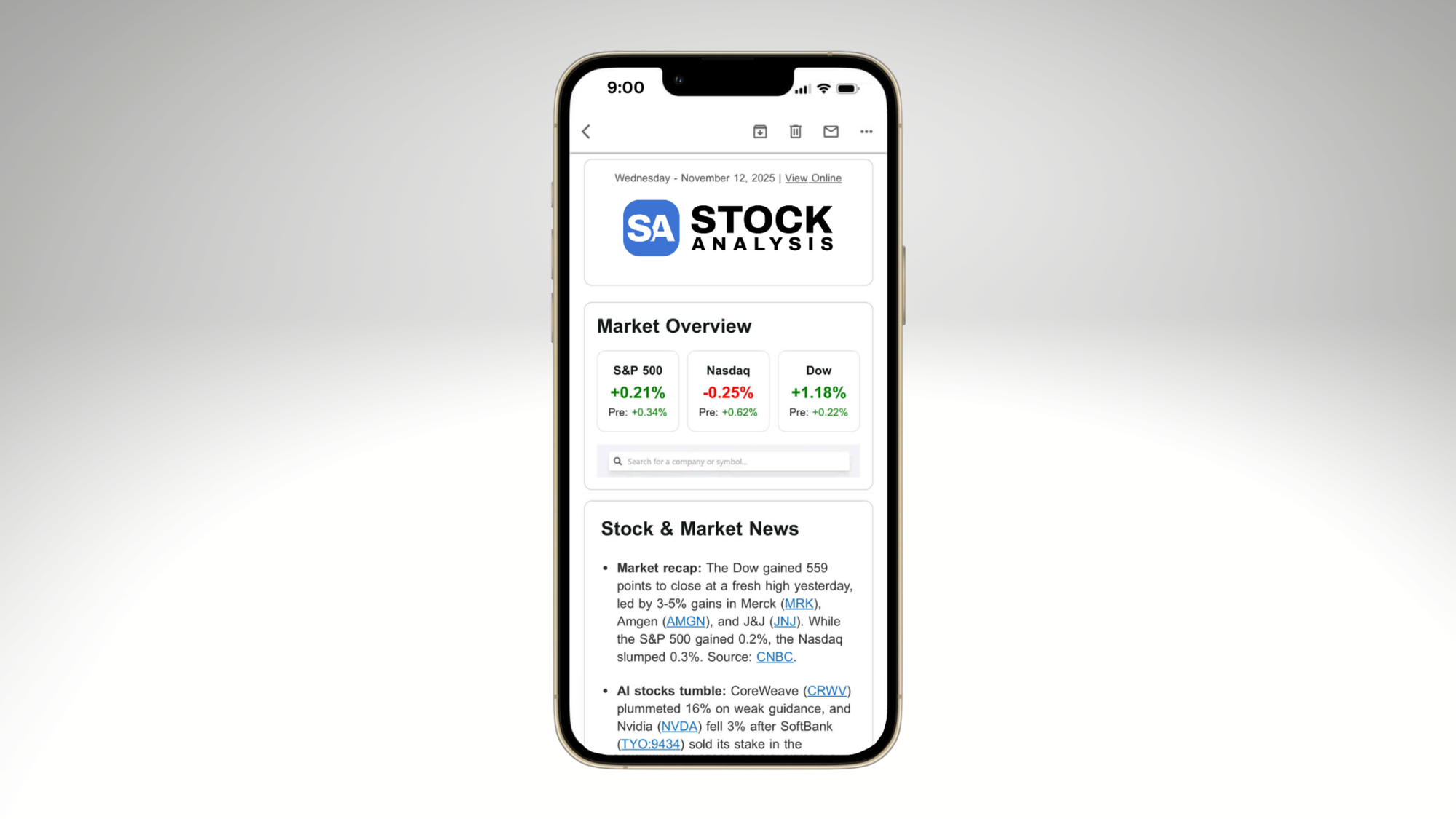
WE AT TICKER NERD READ THIS EVERY MORNING
The 2-Minute Morning Brief We Never Miss
Market Bullets delivers everything you need to know before markets open:
• Quick market overview in scannable bullet points
• Top market-moving news filtered from high-quality sources only
• Major earnings and IPOs without the clickbait noise
We read this every morning before the bell. It's the fastest way to stay current without drowning in financial news.
→ Financial Research Platforms
Platforms such as Seeking Alpha provide detailed company analysis, earnings commentary, and valuation discussions from analysts and independent contributors.
These platforms allow investors to:
- Compare multiple viewpoints
- Identify bullish and bearish arguments
- Follow earnings discussions and forecasts
While opinions vary, these platforms help investors build a broader perspective around a particular stock.
→ Market Data and Institutional Platforms
Institutional investors often rely on comprehensive data platforms like LSEG Workspace, which provide real-time market data, financial statements, economic indicators, and global market analytics.
These professional systems offer:
- Real-time market data
- Corporate financial filings
- Advanced financial modeling tools
- Global economic research
While such platforms are typically used by investment firms, they illustrate the level of data analysis commonly involved in professional investment research.
→ Charting and Technical Analysis Tools
Charting platforms such as TradingView allow investors to analyze historical price movements and identify market trends.
These tools often include:
- Technical indicators
- Trend analysis
- Volume tracking
- Pattern recognition
Even investors focused primarily on fundamentals frequently use charting tools to identify potential entry points.
→ AI-Driven Financial Analysis
Artificial intelligence is increasingly integrated into financial research workflows.
Major investment firms are now deploying AI tools capable of analyzing earnings transcripts, regulatory filings, and financial reports to accelerate the research process.
These technologies help investors process vast amounts of financial data more efficiently, although human judgment remains essential in interpreting the results.
Developing an Investment Thesis
Before purchasing a stock, it is useful to formulate a clear investment thesis. This process forces investors to articulate the reasoning behind a decision rather than relying on intuition or market hype.
A strong thesis explains why a company is expected to grow over time, what factors could challenge that growth, and what developments would invalidate the original investment idea.
Writing down this reasoning can serve as a valuable reference point in the future.
Markets change quickly, and having a documented thesis helps investors evaluate whether new information strengthens or weakens the original assumptions behind an investment.
The Reality of Investing
Many investors spend significant time searching for the next breakout stock or the fastest-growing company. In practice, however, consistent results in financial markets rarely come from a single opportunity.
Long-term success is more often the product of discipline, structured research, and patience. Markets will always involve uncertainty, unexpected events, and changing narratives.
A thoughtful research process does not eliminate risk, but it helps investors approach decisions with greater clarity and confidence, reducing the influence of emotion and short-term noise.