🔇 Research without the noise

— What I check before adding anything to my portfolio
Most investors today have access to more financial information than at any time in history.
Stock charts update instantly.
News alerts appear every minute.
Social media feeds are filled with opinions, predictions, and trade ideas.
At first glance, it looks like a golden age for individual investors.
But the reality is more complicated.
The biggest challenge facing investors today is not access to information.
It’s too much noise and too little structure.
You’re reading The Growth Thesis — a publication designed to help readers cut through the noise and understand the forces that truly drive wealth creation.
No hype. No speculation.
Just disciplined thinking for sustainable growth.
Information Has Exploded — But Clarity Has Not
Over the past decade, the amount of financial data available to investors has grown dramatically.
Corporate filings, earnings transcripts, analyst reports, macroeconomic indicators, and real-time market data are all widely accessible online.
But quantity doesn’t automatically translate into clarity.
Many investors jump between dozens of websites, dashboards, spreadsheets, and news sources — trying to piece together a coherent picture of a company or an industry.
The result is often a fragmented research process.
Instead of building conviction in an investment idea, investors can end up drowning in scattered information.
The Rise of Independent Investors
At the same time, individual investors are playing a much larger role in markets.
According to data from the Financial Industry Regulatory Authority (FINRA) and other market studies, retail investors now account for a significant portion of daily trading activity in U.S. equities.
Online brokerages and zero-commission trading have dramatically lowered the barrier to entry.
And platforms like Reddit, X, and YouTube have created entire communities focused on market analysis and stock picking.
But as retail participation grows, so does the need for reliable research tools.
Because in the long run, successful investing tends to rely on something simple:
Understanding the businesses behind the stocks.
Why Fundamentals Still Matter
Despite the rise of algorithmic trading and quantitative investing, fundamental analysis remains one of the most widely used methods for evaluating companies.
Professional investors still study factors like:
- revenue growth
- profit margins
- debt levels
- cash flow generation
- long-term competitive advantages
These metrics help investors answer a basic question:
Is this company actually becoming more valuable over time?
Access to clear financial data can make that process much easier.
But if the data is scattered across multiple sources — or presented inconsistently — building a clear view of a company becomes difficult.
The Challenge of Reliable Financial Data
Another complication is that financial data often comes from multiple providers.
Corporate filings are published through the U.S. Securities and Exchange Commission’s EDGAR system, but the raw documents can be long, technical, and difficult to navigate.
Many investors therefore rely on research platforms that organize this information into readable formats.
The popularity of financial data platforms has grown rapidly in recent years as more investors seek ways to streamline their research workflow.
For example, services like Bloomberg Terminal, FactSet, and Morningstar have long provided structured financial data to institutional investors.
But these platforms can cost thousands of dollars per year — far beyond the reach of most individuals.
That gap has created a growing market for simpler research tools designed specifically for independent investors.
Why a Structured Research Process Matters
Many experienced investors eventually develop a consistent process for evaluating companies.
This process often includes steps like:
- reviewing long-term revenue and earnings trends
- analyzing balance sheet strength
- studying management commentary in earnings calls
- comparing valuation metrics across competitors
Having a consistent workflow helps investors avoid one of the most common pitfalls in markets: decision-making driven by short-term headlines.
Markets move quickly, but business fundamentals tend to evolve much more slowly.
A structured research process allows investors to focus on what actually matters.
Technology Is Changing Investment Research
Technology is also transforming how investors access and analyze financial information.
Artificial intelligence and automated data tools are increasingly used to process corporate filings, summarize earnings reports, and highlight key metrics.
Large institutions have relied on these technologies for years, but newer platforms are beginning to bring similar capabilities to individual investors.
This shift is part of a broader trend toward democratizing financial data — making tools once reserved for professionals accessible to anyone interested in analyzing businesses.
"WE AT TICKER NERD READ THIS EVERY MORNING
The 2-Minute Morning Brief We Never Miss"
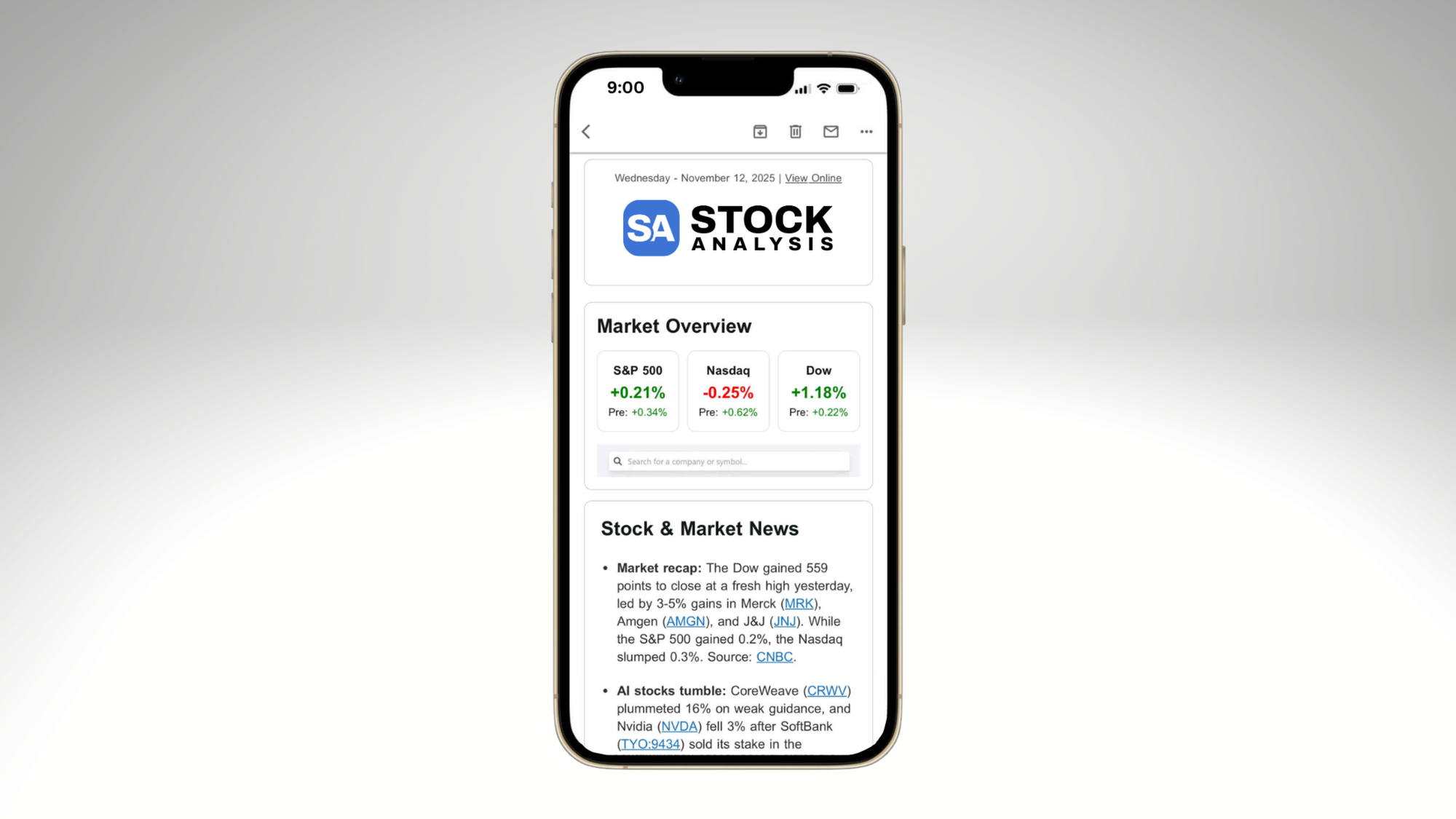
Market Bullets delivers everything you need to know before markets open:
→ Quick market overview in scannable bullet points
→ Top market-moving news filtered from high-quality sources only
→ Major earnings and IPOs without the clickbait noise
We read this every morning before the bell. It's the fastest way to stay current without drowning in financial news.
Markets will always be unpredictable in the short term.
Prices move based on countless factors — macroeconomic data, investor sentiment, geopolitical events, and algorithmic trading.
But over long periods of time, one factor tends to matter more than anything else:
The strength of the underlying business.
For investors who focus on fundamentals, having clear and reliable research tools can make the process of evaluating companies far more efficient.
In a world overflowing with financial information, the real advantage may simply come from seeing the data clearly — without the noise.